
What is an NFC reader? How does it work?
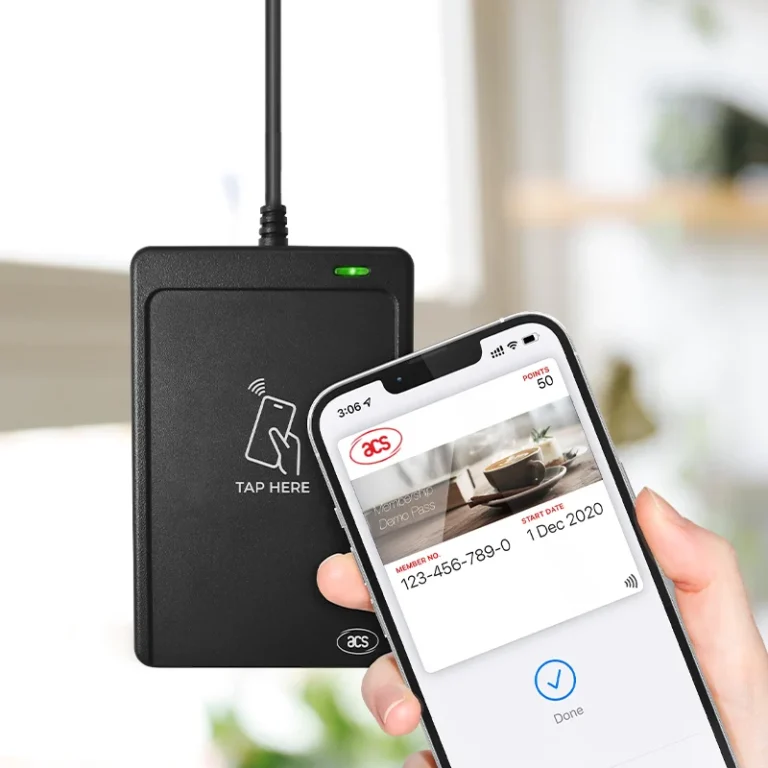
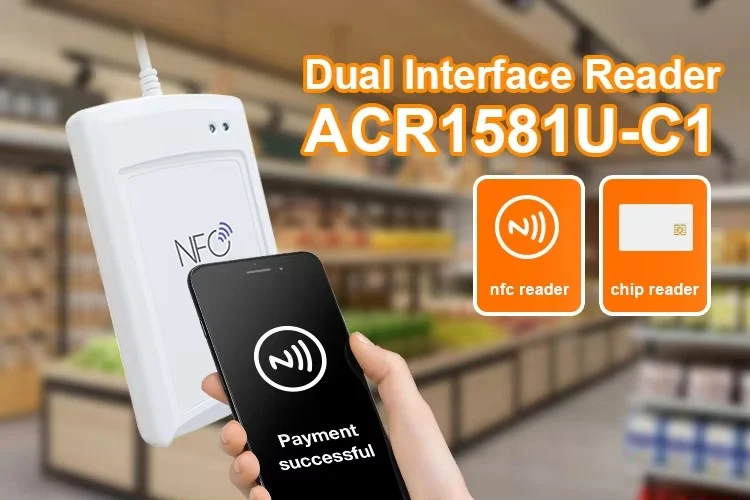
Have you ever seen a scene where you can open a door by swiping a card or pay with a phone? These magical operations are actually inseparable from a small device – an NFC reader.
NFC, the full name of which is “near field communication”, is a wireless technology. Simply put, it is like a pair of “talking” devices. As long as the distance is close enough (usually within 10 cm), they can exchange information with each other without plugging in wires, Bluetooth, or Wi-Fi.
Working principle of NFC reader
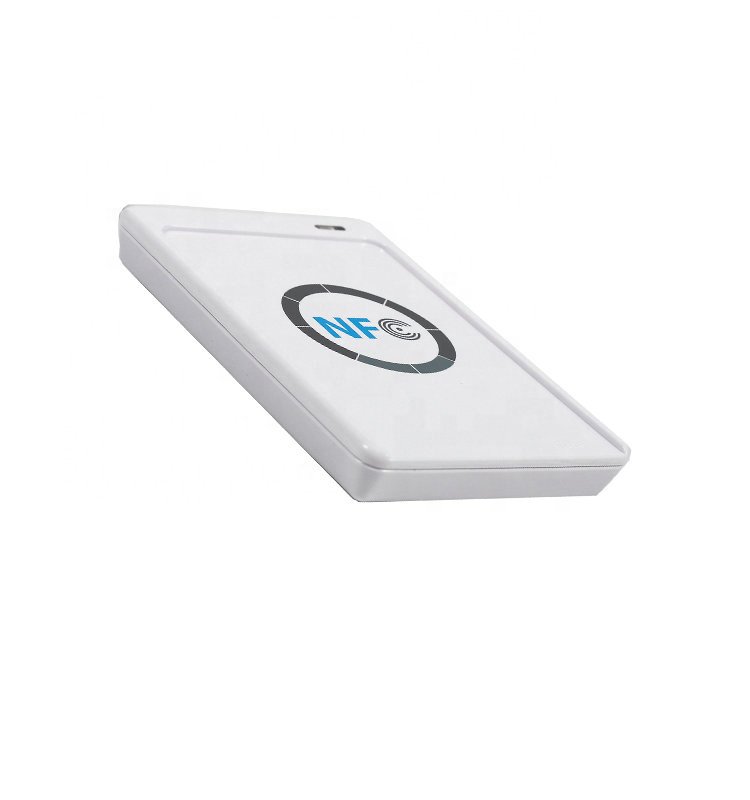
NFC reader uses 13.56MHz wireless signals to communicate with another device (such as access card, mobile phone, key chain). What’s more amazing is that it can also “borrow power” from the other party!
What does it mean? For example, if we have an access card without a battery in our hands, how does it work? It turns out that when it is close to the NFC reader, the reader will emit a little bit of electricity to wake up the card, and then it can read the information in the card, such as “This is an employee card, which can open the door.”
Active vs Passive NFC
NFC technology is actually divided into two types: active and passive.
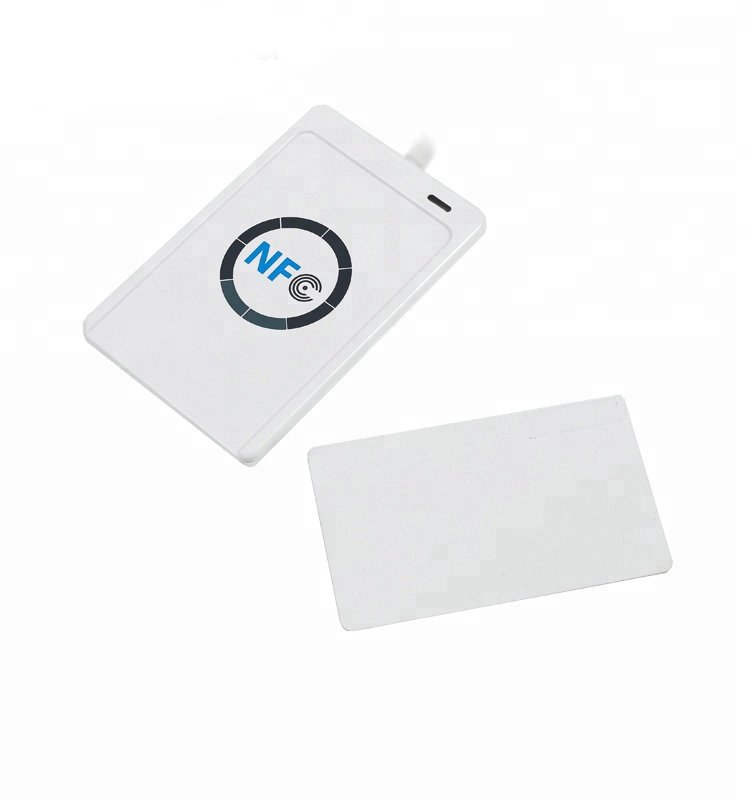
Active NFC: Both devices have power. For example, two mobile phones can “chat” and transfer photos to each other when they are close to each other, because they both have power and the ability to “speak” and “listen”.
Passive NFC: One has power (such as a card reader) and the other does not (such as an access card or a bus card). The card reader is responsible for generating power, and the card is like passively “listening to instructions” and answering questions.
The Future of NFC Technology
In the future, NFC will become faster and farther, and may also be combined with new technologies such as the Internet of Things and 5G to make our lives smarter. For example, automatic identity recognition, smart door locks, smart parking lots… Behind them, there may be an NFC card reader working silently.