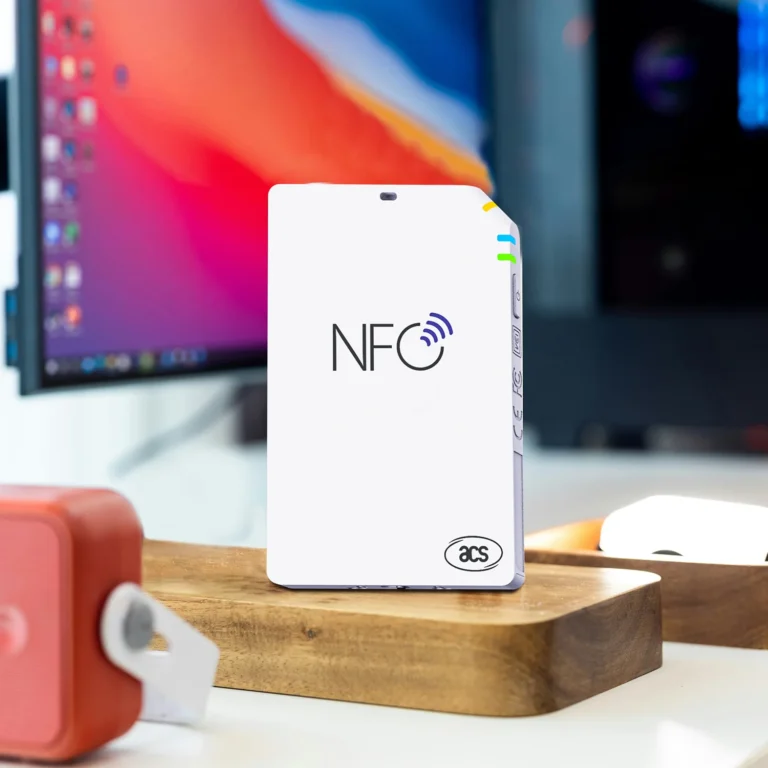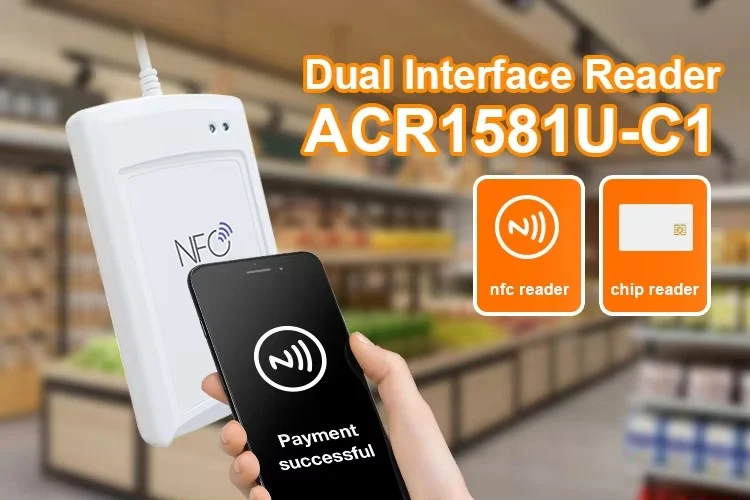

ACR1581U DualBoost III Smart Card Reader: How to Use It for Secure Identity, Payments, and Enterprise Applications
The ACR1581U DualBoost III Smart Card Reader is a third-generation dual-interface smart card reader that supports both contact and contactless technologies, making it suitable for identity management, secure authentication, payment environments, and enterprise-level access control systems. With support for ISO 7816 contact cards, ISO 14443 Type A and Type B cards, ISO 15693 cards, MIFARE®, FeliCa, NFC tags, and SAM cards, the device is designed for projects that require high reliability, strong security, and interoperability.
This guide explains how the reader works, how to deploy it in real-world applications, and how to integrate it into professional systems.
How the ACR1581U DualBoost III Works
The device serves as a bridge between a computer, mobile device, or host system and a smart card. It communicates through USB CCID and follows PC/SC specifications, which allows system developers to integrate it without custom drivers on most modern operating systems.
The reader provides three functional interfaces:
- ICC (Contact Card Interface) – ISO 7816 Class A, B, and C cards, including microprocessor cards and memory cards
- PICC (Contactless Interface) – ISO 14443, ISO 15693, MIFARE®, FeliCa, NFC tags
- SAM Interface – Secure Access Module for encryption and key security
Supported operating systems include Windows, macOS, Linux, Android, and iOS / iPadOS (16 or above).

Typical Application Scenarios by Market
1. Payments and Transit Systems
- Closed-loop transport cards
- Stored-value cards and ticketing
- Fare authentication terminals
- Loyalty and prepaid card issuance
The PICC interface supports fast contactless transactions, while the SAM slot enhances cryptographic security for key storage and authentication.
2. Government and Citizen Identity Programs
- Electronic identity cards
- Public service authentication
- Digital certificates and secure login
- Border and administrative identity verification
The device supports Personal Identity Verification Cards and Common Access Cards, making it suitable for regulated environments.
3. Healthcare and Insurance Systems
- Patient identity authentication
- Health card management
- Secure staff access and authorization
- Prescription and record verification workflows
Support for multiple protocols ensures compatibility across regional card systems.
4. Enterprise Access Control and Workforce Systems
- Secure building entry
- Time-and-attendance authentication
- Employee identity management
- Multi-application credential systems
The contact + contactless design enables hybrid identity workflows.
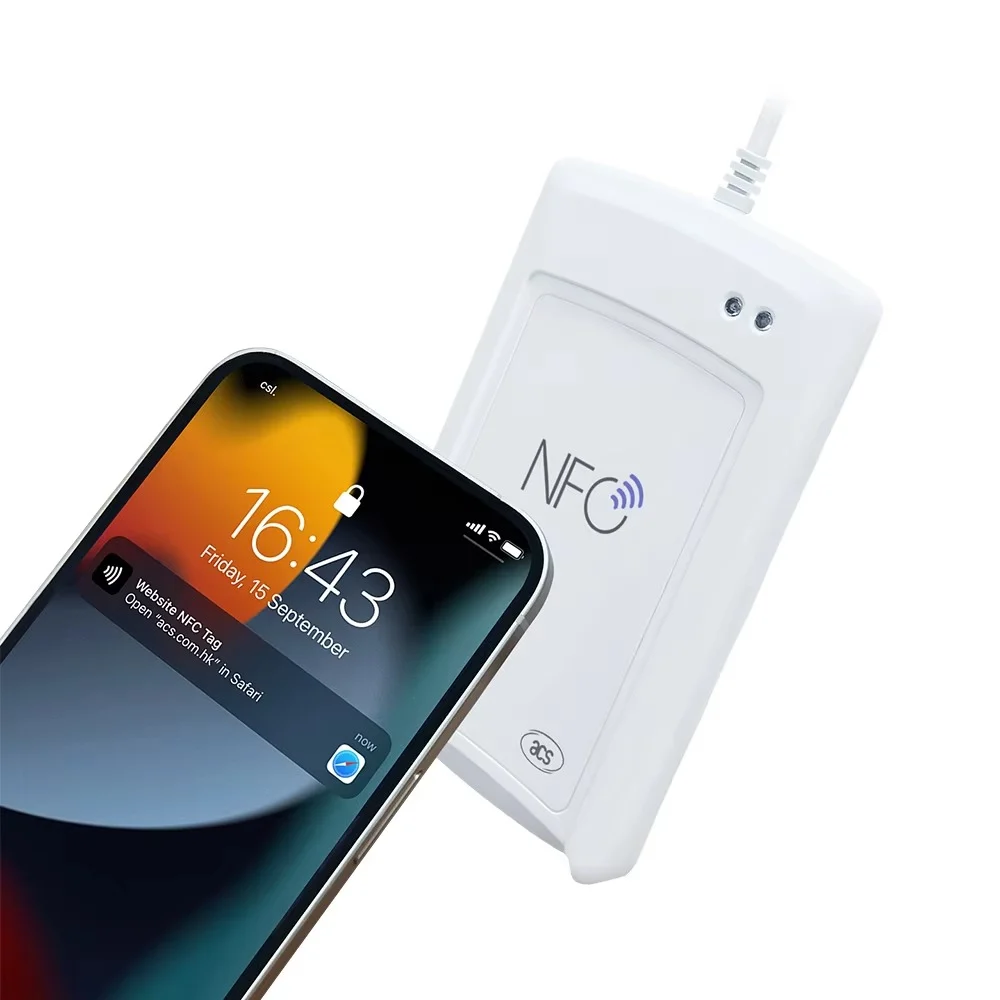
How to Use the ACR1581U DualBoost III Smart Card Reader in Practical Deployments
Step 1 — Connect and Install
- Plug the device into a USB Type-A or USB Type-C interface.
- The host detects the reader through USB CCID.
- No proprietary driver is required for most systems using PC/SC.
For custom development, use standard PC/SC APIs in your application layer.
Step 2 — Select the Operating Mode
The reader supports:
- Smart Card Reader / Writer Mode
- Card Emulation Mode
- Keyboard Emulation Mode (configurable)
Choose the mode according to the project requirement, such as authentication, enrollment, or data capture.
Step 3 — Work With Contact Cards (ICC)
- Commands follow Application Protocol Data Unit (APDU) under ISO 7816.
- For microprocessor card operations, refer to the card documentation and PC/SC specifications.
- Suitable for secure login, certificate validation, and signing environments.
Step 4 — Work With Contactless Cards (PICC)
- Supports speeds up to 848 kbps
- Built-in antenna with up to 70 mm reading distance (depending on tag type)
- Compatible with MIFARE®, FeliCa, ISO 14443, ISO 15693, NFC tags
This mode is typically used for payments, ticketing, and physical access control.
Step 5 — Use SAM for Security-Critical Applications
The Secure Access Module slot provides:
- Cryptographic key protection
- Secure authentication for transactions
- Reinforced anti-cloning security
This is essential for payment, transportation, and government identity projects.
Step 6 — System Integration Guidelines
- Follow PC/SC middleware standards
- Use structured APDU exchange handling
- Validate card compatibility during deployment
- Define clear user flows for contact vs. contactless cards
- Enable firmware upgrade support for lifecycle maintenance
This approach improves reliability and long-term scalability.
Best Practices for Deployment
- Keep reading distance within practical physical limits to reduce mis-reads
- Use secure key handling when SAM modules are enabled
- Separate test cards and production credentials
- Validate system performance with actual card media used in each market
- Maintain firmware and OS compatibility during updates
Frequently Asked Questions (FAQ)
What operating systems support the ACR1581U DualBoost III Smart Card Reader?
The device supports Microsoft Windows, Linux, macOS, Android, and Apple iOS / iPadOS version 16 or above through the USB CCID class and PC/SC standard.
What types of smart cards are compatible with this reader?
It supports ISO 7816 contact cards, ISO 14443 Type A and Type B contactless cards, ISO 15693 cards, MIFARE® cards, FeliCa cards, NFC tags, Secure Access Module cards, and memory cards following PC/SC specifications.
Can this reader be used for government identity authentication projects?
Yes. It supports Personal Identity Verification Cards and Common Access Cards, and is suitable for secure identity authentication and administrative systems.
Is the Secure Access Module slot required for every application?
No. The Secure Access Module slot is used when cryptographic key protection or transaction-level security is necessary, such as in transport ticketing or secure payment environments.
Does the reader require a proprietary driver?
No. It follows the USB CCID class and PC/SC standard, allowing plug-and-play integration on most systems without proprietary drivers.
Is firmware upgrade supported?
Yes. The device supports firmware upgrade to maintain compatibility and security across lifecycle deployments.
Conclusion
The ACR1581U DualBoost III Smart Card Reader is designed for professional environments where stability, interoperability, and security are critical. Its dual-interface architecture, multi-card compatibility, Secure Access Module support, and PC/SC-based integration make it suitable for payments, identity authentication, enterprise security, government programs, and healthcare applications.