
NFC Reader Technology: Principles, Applications, and Practical Guide
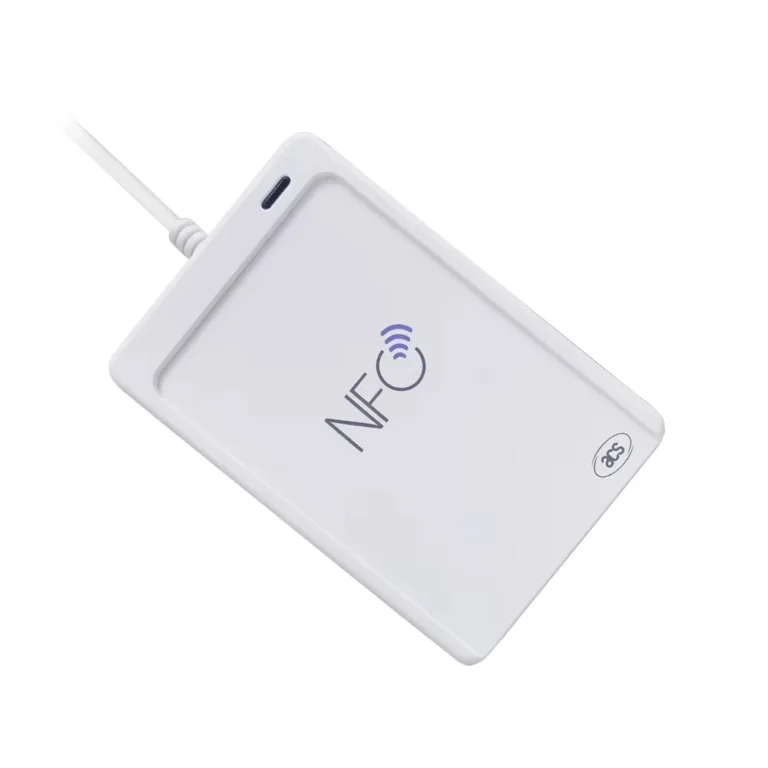
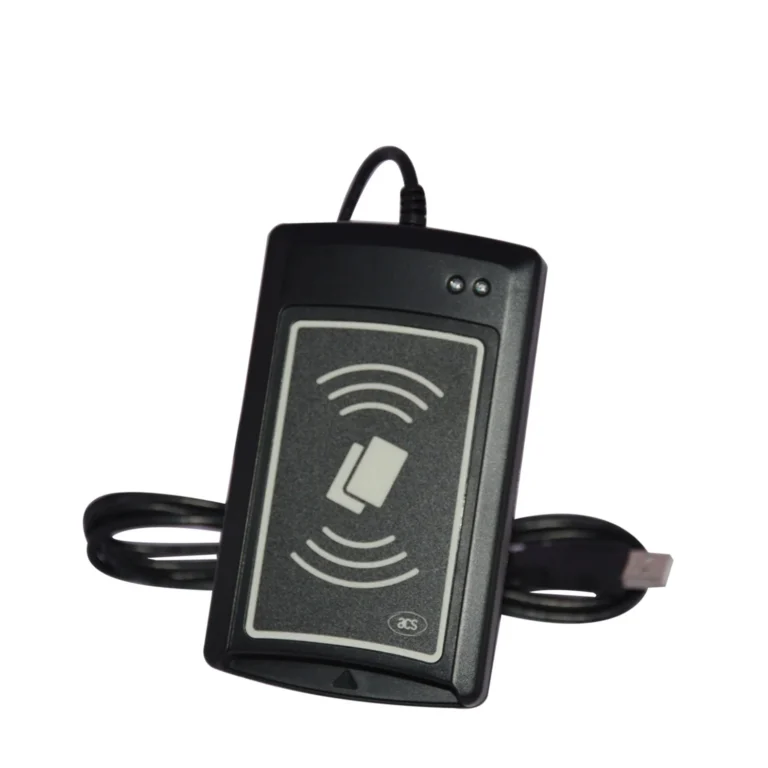
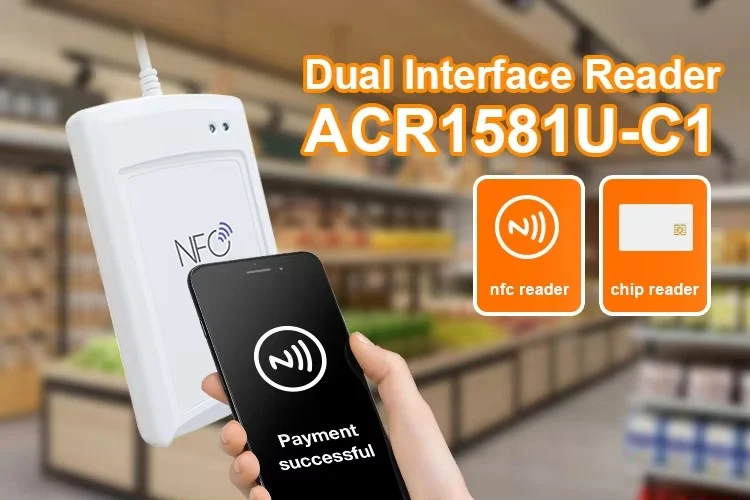
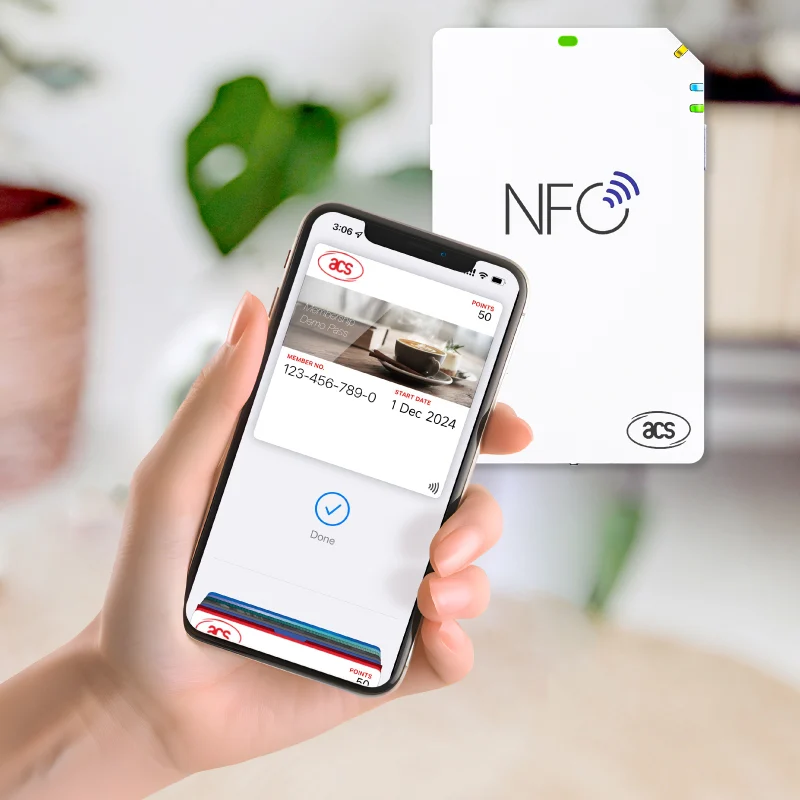
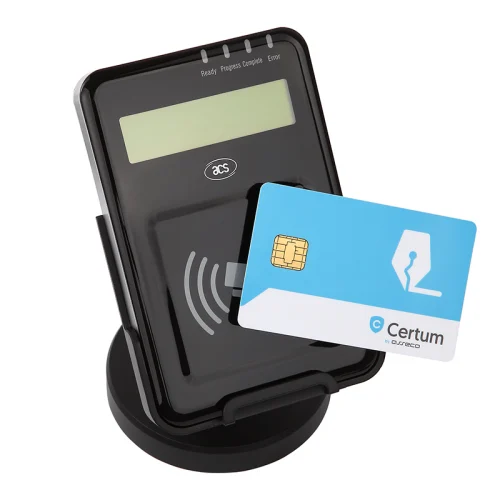
Near Field Communication (NFC) has become a foundational technology for short-range wireless interaction, powering use cases such as contactless payments, access control, IoT device pairing, and electronic ticketing. At the core of these interactions is the NFC reader — the device responsible for powering tags, reading and writing data, and facilitating secure exchanges.
This post provides a practical yet comprehensive breakdown of NFC reader technology, covering underlying principles, hardware and protocols, key technical attributes, real-world applications, and actionable guidance for both users and developers.
1. NFC Reader Fundamentals: What Makes It Work
Short-Range High-Frequency Communication
NFC operates at 13.56 MHz, using electromagnetic induction to form a short-distance communication link between an NFC reader and an NFC tag or compatible device. Unlike Bluetooth or Wi-Fi, NFC does not require pairing — simply bringing devices close together (typically within a few centimeters) initiates communication with millisecond-level responsiveness and low power consumption.
NFC enables data transfer and power delivery simultaneously: the reader generates an RF field that can energize passive tags while exchanging information.
Hardware Components and Protocol Stack
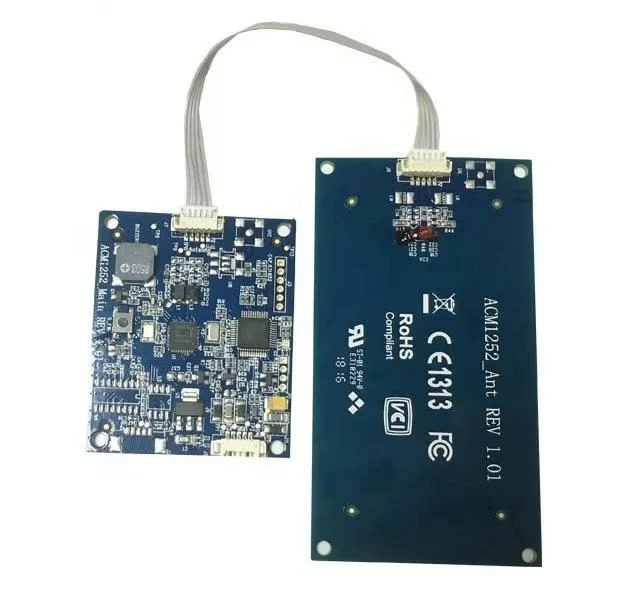
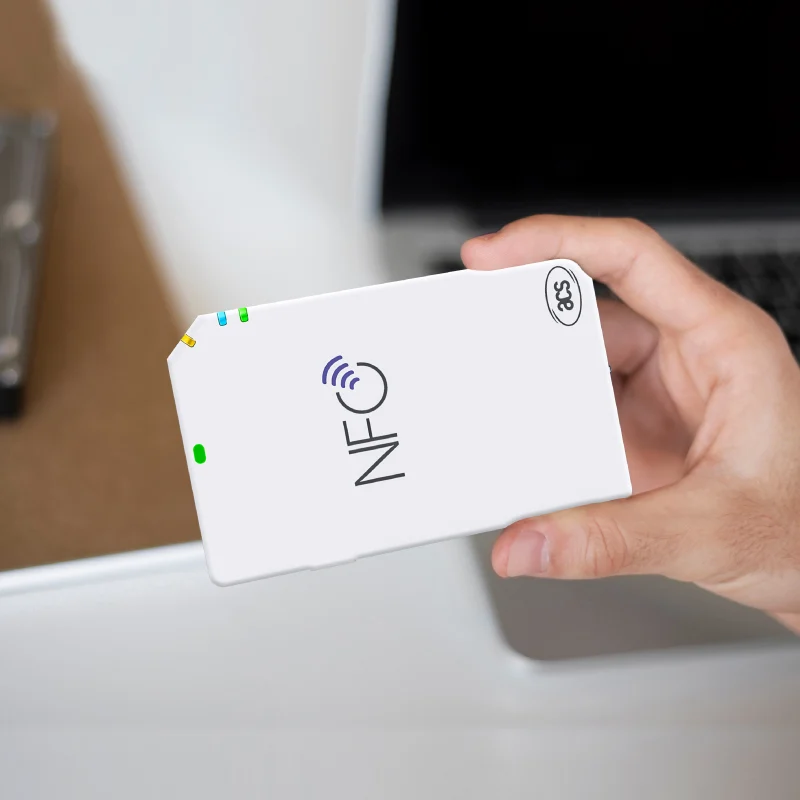
A typical NFC reader combines multiple key components:
- RF Module: Generates and receives the 13.56 MHz signal.
- Control Processor: Encodes, decodes, and interprets NFC protocol frames.
- Antenna: Creates the local electromagnetic field.
- Optional Security Chip: Handles on-device cryptography.
The NFC communication stack can be viewed in three layers:
- Physical Layer: Governs frequency, modulation, and reliable signal transport.
- Data Link Layer: Manages anti-collision, error detection, and link flow control.
- Application Layer: Supports structured formats such as NDEF (NFC Data Exchange Format) for data interoperability.
Operating Modes: Reader/Writer, Card Emulation, Peer-to-Peer
Modern NFC readers support three core modes:
- Reader/Writer Mode: The reader actively polls and exchanges data with NFC tags (e.g., scanning a transit card or access badge).
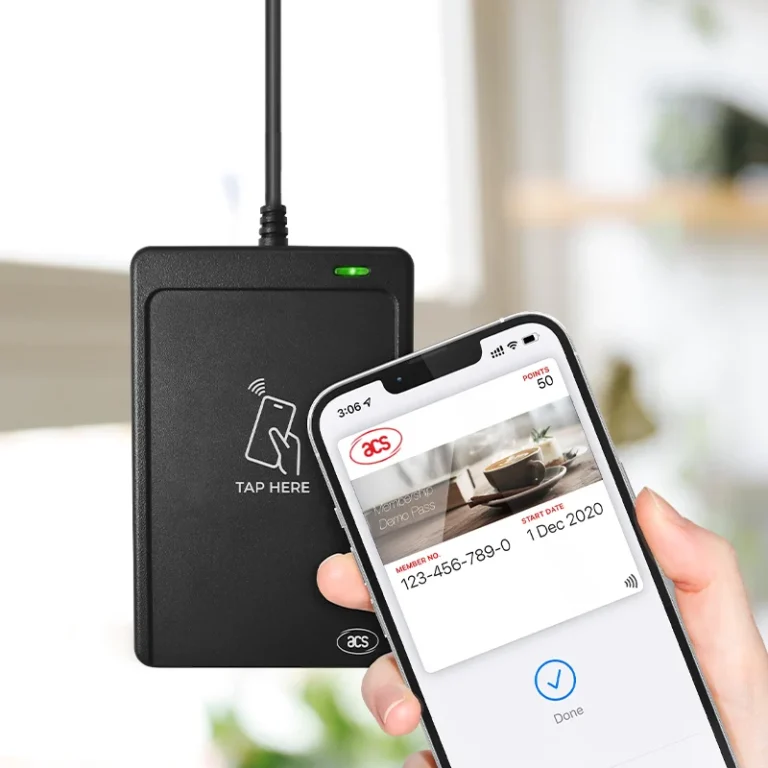
- Card Emulation Mode: The reader can act like a tag, enabling devices such as smartphones to emulate NFC cards for payments or access control.
- Peer-to-Peer Mode: Two NFC devices exchange data directly (e.g., contact or small file transfer).
Smart systems can detect context and switch modes automatically when needed.
2. Critical NFC Reader Features for Selection and Use
When choosing or integrating an NFC reader, the following characteristics are essential:
Read/Write Performance
- Effective Distance: Standard passive tags operate within ~1–5 cm.
- Data Rate: 13.56 MHz supports fast communication suitable for time-sensitive use cases like payments.
- Memory Compatibility: Readers must support tags with varying capacities, from small ID tags to larger NDEF message storage.
Compatibility and Standards Support
A quality NFC reader should support multiple tag standards and platforms:
- ISO/IEC 14443 A/B
- ISO/IEC 18092
- NFC Forum specifications
- Support for major OS platforms (Android, iOS, Windows)
Universal API support helps developers reduce fragmentation and avoid issues like failed reads or writes.
Security and Reliability
Security matters in sensitive environments like access control or payments. Core capabilities include:
- Mutual authentication: Prevents unauthorized tag interaction.
- Encrypted communication: Protects data between reader and tag.
- Anti-collision: Ensures accurate reads when multiple tags are present.
3. NFC Reader Use Cases: Everyday to Industrial
Consumer and Everyday Scenarios
- Contactless Payments: POS terminals use NFC readers to accept payments from phones and cards.
- Building Access Control: NFC readers verify authorized badges or mobile credentials.
- Smart Home Control: Tapping an NFC tag triggers home automation actions.
Public Services and Transit
- Public Transportation: NFC readers process commuter cards or mobile tickets with fast throughput.
- Event Ticketing: Quick validation at venues without paper tickets.
- Identity Verification: Employee ID and campus access with secure tag scanning.
Industrial and IoT Applications
- Asset Tracking: Read NFC tags on equipment to inspect or log status.
- Product Authentication: Consumers scan NFC labels to verify origin or authenticity.
- Device Provisioning: Pair IoT devices quickly without manual Wi-Fi/Bluetooth setup.
4. NFC Reader Example: Longjie NFC Reader Parameters
To ground the discussion, here is an example specification for a Longjie NFC Reader model — useful as a reference when comparing products:
| Specification | Description |
|---|---|
| Operating Frequency | 13.56 MHz |
| Supported Protocols | ISO14443 A/B, ISO18092 (NFC) |
| Interfaces | USB, Serial, Optional Wi-Fi |
| Read Distance | Approx. 1–5 cm (varies with tag type) |
| Compatible Tags | NTAG213, MIFARE Classic, ISO15693, etc. |
| Platform Support | Android, iOS, Windows SDK available |
| Security Features | Encryption, Anti-collision support |
This parameter set aligns with common NFC reader products and provides baseline expectations for performance and compatibility.
For comparison, contactless readers from established lines often support these same standards with additional certification for commercial applications.
5. Practical NFC Reader Implementation Guide
For Everyday Users
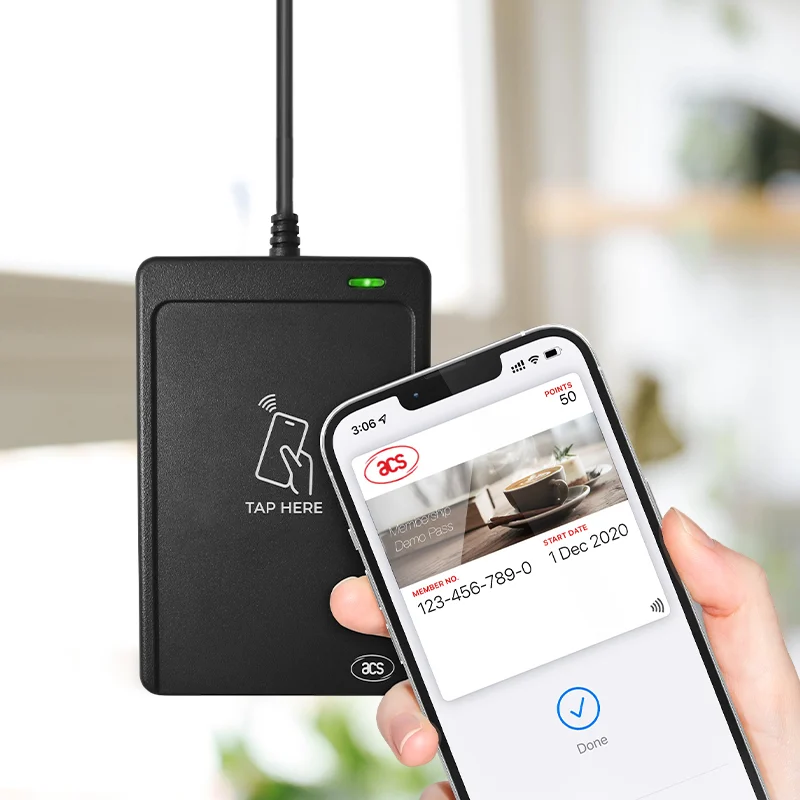
Most modern smartphones have built-in NFC that can act as a reader:
- Enable NFC in device settings.
- Install an NFC utility app (e.g., NFC Tools).
- Choose Read and hold the device near a tag or card.
- For writing, enter data and tap “Write” with a blank tag.
For Developers (Android Example)
Typical Android NFC integration steps:
- Declare NFC permissions in
AndroidManifest.xml. - Use
NfcAdapterto check for NFC support. - Handle NFC intents in
onNewIntentto process tag data. - Construct and write NDEF messages using the platform API.
Practical Tips
- Keep the reader antenna and tag close for reliable reads.
- Ensure a tag is writable before attempting to write.
- For secure interactions, use certified hardware and cryptographic protections.
6. NFC Reader Technology Trends
NFC readers continue to evolve toward:
- Integrated multimodal interfaces (e.g., NFC + QR + Bluetooth)
- Smarter analytics and context-aware behavior
- Expansion into medical, automotive, and access ecosystems
Conclusion
A clear understanding of how NFC readers work — from hardware and protocol fundamentals to real-world applications and implementation strategies — empowers both developers and end users. Well-selected NFC hardware paired with practical usage knowledge enables robust and secure interaction across everyday and industrial scenarios.